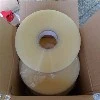
As a seasoned supplier of BOPP (Biaxially Oriented Polypropylene) film, I've fielded numerous inquiries about its suitability for vacuum packaging. It's a topic of great interest, as vacuum packaging has become a widespread method for preserving the quality, freshness, and shelf life of a diverse range of products. In this blog, we'll delve into the properties of BOPP film and evaluate its viability for use in vacuum packaging applications.
Understanding BOPP Film
BOPP film is a versatile packaging material made from polypropylene resin that has been stretched in both the machine and transverse directions. This biaxial orientation process imparts several desirable properties to the film, including high tensile strength, excellent clarity, good stiffness, and low moisture and gas permeability. These characteristics make BOPP film a popular choice for a variety of packaging applications, such as food packaging, labels, tapes, and laminations.
Key Considerations for Vacuum Packaging
Vacuum packaging involves removing air from a package and then sealing it to create a low-oxygen environment. This process helps to prevent the growth of aerobic bacteria, mold, and yeast, which can cause spoilage and deterioration of food products. It also helps to preserve the flavor, aroma, and texture of the contents by reducing oxidation and moisture loss. When selecting a packaging material for vacuum packaging, several factors need to be considered:
Barrier Properties
One of the most critical requirements for vacuum packaging is the ability to provide an effective barrier against oxygen, moisture, and other gases. Oxygen can cause oxidation of fats and oils in food products, leading to rancidity and off-flavors. Moisture can promote the growth of microorganisms and cause the product to become soggy or moldy. A good vacuum packaging film should have low oxygen and moisture transmission rates to maintain the quality and freshness of the contents.
Sealability
The ability to form a strong and reliable seal is essential for vacuum packaging. The film should be able to seal tightly around the edges of the package to prevent air from leaking back in. A poor seal can compromise the effectiveness of the vacuum packaging process and lead to premature spoilage of the product.
Puncture Resistance
For vacuum packaging of products with sharp edges or irregular shapes, the film should have good puncture resistance to prevent tears and leaks. Punctures in the film can allow air and moisture to enter the package, reducing the shelf life of the product.
Flexibility and Conformability
The film should be flexible enough to conform to the shape of the product being packaged. This is particularly important for products with irregular shapes or uneven surfaces. A film that is too stiff or inflexible may not form a tight seal around the product, leading to voids where air can accumulate.
Assessing BOPP Film for Vacuum Packaging
Now that we've outlined the key considerations for vacuum packaging, let's evaluate how BOPP film measures up:
Barrier Properties
BOPP film has relatively low oxygen and moisture transmission rates compared to other plastic films, such as polyethylene (PE) and polyvinyl chloride (PVC). However, its barrier properties are not as good as those of some specialty films, such as ethylene vinyl alcohol (EVOH) and polyamide (PA). For applications where high barrier performance is required, BOPP film can be laminated with other materials, such as aluminum foil or EVOH, to enhance its barrier properties.
Sealability
BOPP film can be heat-sealed using a variety of methods, including impulse sealing, hot bar sealing, and ultrasonic sealing. The seal strength of BOPP film depends on several factors, such as the type of sealing equipment used, the sealing temperature, and the dwell time. With proper sealing conditions, BOPP film can form strong and reliable seals that are suitable for vacuum packaging.
Puncture Resistance
The puncture resistance of BOPP film is generally good, but it can vary depending on the thickness and formulation of the film. Thicker BOPP films tend to have better puncture resistance than thinner films. Additionally, some BOPP films are formulated with additives to improve their puncture resistance.
Flexibility and Conformability
BOPP film is a relatively flexible material that can conform to the shape of the product being packaged. However, its flexibility may be limited compared to some other plastic films, such as PE. For applications where high flexibility is required, BOPP film can be combined with other materials, such as PE, to improve its flexibility and conformability.
Applications of BOPP Film in Vacuum Packaging
Despite its limitations, BOPP film can be a suitable choice for vacuum packaging in certain applications. Here are some examples:
Snack Foods
BOPP film is commonly used for vacuum packaging of snack foods, such as potato chips, nuts, and candy. The film provides a good barrier against oxygen and moisture, which helps to preserve the freshness and crunchiness of the snacks. Additionally, its high clarity allows consumers to see the contents of the package, which can be an important marketing feature.
Bakery Products
BOPP film can also be used for vacuum packaging of bakery products, such as bread, cakes, and pastries. The film helps to prevent the growth of mold and yeast, which can extend the shelf life of the products. It also helps to retain the moisture in the bakery products, which can prevent them from drying out and becoming stale.
Non-Food Products
In addition to food products, BOPP film can be used for vacuum packaging of non-food products, such as electronics, textiles, and medical devices. The film provides a protective barrier against dust, moisture, and other contaminants, which can help to prevent damage to the products during storage and transportation.
Conclusion
In conclusion, BOPP film can be a suitable choice for vacuum packaging in certain applications. Its low oxygen and moisture transmission rates, good sealability, puncture resistance, and flexibility make it a versatile packaging material that can be used for a variety of products. However, its barrier properties may not be sufficient for applications where high barrier performance is required. In such cases, BOPP film can be laminated with other materials to enhance its barrier properties.
If you're interested in using BOPP film for vacuum packaging, I encourage you to explore our range of products, including Super / Crystal Clear BOPP Film Jumbo Roll and Normal BOPP Film Jumbo Roll. Our team of experts can help you select the right film for your specific application and provide you with technical support and guidance. Contact us today to discuss your packaging needs and start a procurement conversation.


References
- "Biaxially Oriented Polypropylene (BOPP) Films Market - Global Industry Analysis, Size, Share, Growth, Trends, and Forecast, 2019 - 2027." Transparency Market Research.
- "Vacuum Packaging: Principles and Applications." Food Packaging Technology, edited by Owen R. Fennema, Marcel Dekker, 2000.
- "Plastics Packaging: Properties, Processing, Applications, and Regulations." Second Edition, edited by Rosato, David V., and Dominick V. Rosato, Hanser Publications, 2012.