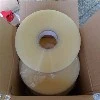
Hey there! I'm a supplier of Normal BOPP Film Jumbo Roll. Today, I'm gonna share some tips on how to increase the tear strength of these rolls.
Understanding the Basics of BOPP Film
First off, let's quickly go over what BOPP film is. Biaxially Oriented Polypropylene (BOPP) film is a popular packaging material. It's made by stretching polypropylene film in both the machine and transverse directions. This process gives the film its excellent mechanical properties, like high tensile strength and good clarity.
But sometimes, the tear strength of normal BOPP film jumbo rolls might not be up to par for certain applications. Whether it's for heavy - duty packaging or applications where the film is likely to be tugged or pulled, increasing tear strength becomes crucial.
Material Selection
The type of polypropylene resin you use is the foundation for a strong BOPP film. Different grades of polypropylene have different molecular structures, and some are better suited for high - tear - strength applications.
- High - Molecular - Weight Polypropylene: Look for polypropylene resins with a high molecular weight. These resins have longer polymer chains, which can entangle more effectively. When the film is under stress, these entangled chains can distribute the load better, reducing the likelihood of tearing. For example, some high - performance polypropylene grades are specifically designed for applications that require high tear resistance.
- Additives: Incorporating additives can also significantly enhance tear strength. For instance, slip agents can improve the film's surface properties, reducing friction and preventing the initiation of tears. Antiblocking agents can prevent the film layers from sticking together, which can also contribute to better tear resistance.
Extrusion Process
The extrusion process is where the magic happens in creating a strong BOPP film.
- Temperature Control: Maintaining the right temperature during extrusion is key. If the temperature is too high, the polymer chains can break down, leading to a weaker film. On the other hand, if it's too low, the resin might not melt properly, resulting in an uneven film structure. You need to find the sweet spot for your specific resin grade. Usually, the extrusion temperature for polypropylene is around 200 - 230°C, but this can vary depending on the resin's properties.
- Screw Design: The screw design in the extruder can also affect tear strength. A well - designed screw can ensure proper mixing of the resin and additives, as well as uniform melting. Some screws are designed to provide high shear, which can help in better dispersion of additives and alignment of polymer chains, leading to a stronger film.
Orientation Process
The biaxial orientation process is what gives BOPP film its unique properties.
- Stretching Ratio: The stretching ratio in both the machine direction (MD) and the transverse direction (TD) is crucial. A higher stretching ratio can align the polymer chains more effectively, increasing the film's strength. However, you need to be careful not to over - stretch the film, as this can lead to thinning and weakening in some areas. A common stretching ratio for BOPP film is around 4 - 6 times in the MD and 8 - 10 times in the TD.
- Stretching Speed: The speed at which the film is stretched also matters. A slower stretching speed allows the polymer chains more time to align properly. This can result in a more uniform and stronger film structure. However, slower stretching speeds can also reduce production efficiency, so you need to find a balance between tear strength and production rate.
Post - Processing
After the film is produced, there are still some steps you can take to improve tear strength.
- Annealing: Annealing the film after orientation can relieve internal stresses and improve the film's dimensional stability. This process involves heating the film to a specific temperature and holding it there for a certain period. Annealing can also help in further aligning the polymer chains, increasing tear strength.
- Surface Treatment: Surface treatments, such as corona treatment, can improve the film's adhesion properties. This can be beneficial when the film is used in laminates or when it needs to be printed on. A better - adhered layer can provide additional support to the film, reducing the risk of tearing.
Quality Control
Throughout the production process, quality control is essential.


- Testing: Regularly test the tear strength of the film using standard testing methods, such as the Elmendorf tear test. This test measures the force required to tear the film. By monitoring tear strength at different stages of production, you can identify any issues early and make adjustments to the process.
- Visual Inspection: Conduct visual inspections of the film for any defects, such as scratches, holes, or uneven thickness. These defects can act as stress concentrators, increasing the likelihood of tearing. Removing defective rolls from the production line can ensure that only high - quality products reach the market.
Comparing with Super / Crystal Clear BOPP Film Jumbo Roll
Super / Crystal Clear BOPP Film Jumbo Roll has its own set of characteristics. While it offers excellent clarity, the tear strength requirements might be different. The production processes for super - clear films often focus more on achieving high transparency, which can sometimes come at the expense of tear strength. However, by following the tips mentioned above, you can still improve the tear strength of super - clear BOPP film jumbo rolls. For example, using high - molecular - weight polypropylene and proper additives can enhance tear strength without sacrificing too much clarity.
In conclusion, increasing the tear strength of normal BOPP film jumbo rolls requires a comprehensive approach. From material selection to post - processing and quality control, every step in the production process plays a role. By paying attention to these details, you can produce BOPP film rolls with excellent tear strength, meeting the demands of various applications.
If you're in the market for high - quality BOPP film jumbo rolls with great tear strength, I'd love to have a chat with you. Whether you need Normal BOPP Film Jumbo Roll or Super / Crystal Clear BOPP Film Jumbo Roll, we can discuss your specific requirements and find the best solution for your business.
References
- Modern Plastics Encyclopedia.
- Journal of Applied Polymer Science.
- Polypropylene Handbook.