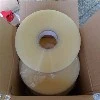
As a supplier of No Noise BOPP Packing Tape, I often encounter inquiries from customers regarding the long - term performance of our product, particularly whether it loses its stickiness over time. In this blog, I will delve into the science behind the tape's adhesive properties, the factors that can influence its stickiness over time, and share some insights based on our experience and industry knowledge.
Understanding No Noise BOPP Packing Tape
No Noise BOPP Packing Tape is a type of packaging tape made from Biaxially Oriented Polypropylene (BOPP) film, which is known for its high tensile strength, clarity, and flexibility. The "no noise" feature is achieved through special manufacturing processes that reduce the sound produced when the tape is unrolled. This is a significant advantage in environments where noise can be a nuisance, such as offices and warehouses.
The adhesive used on No Noise BOPP Packing Tape is typically a pressure - sensitive adhesive (PSA). PSA is designed to adhere to a surface when pressure is applied, without the need for heat, water, or solvents. The performance of PSA is crucial for the tape's stickiness, and it is affected by several factors.
Factors Affecting the Stickiness of No Noise BOPP Packing Tape Over Time
1. Temperature and Humidity
Temperature and humidity are two of the most significant environmental factors that can affect the stickiness of the tape. High temperatures can cause the adhesive to soften, which may lead to a loss of cohesion. When the adhesive softens too much, it can flow and transfer onto the surface, leaving the tape with reduced stickiness. On the other hand, low temperatures can make the adhesive brittle, reducing its ability to conform to the surface and form a strong bond.
Humidity can also have a negative impact on the tape's stickiness. Excessive moisture in the air can cause the adhesive to absorb water, which may lead to a breakdown of the adhesive's structure. This can result in a loss of stickiness and even cause the tape to peel off prematurely.
2. Storage Conditions
Proper storage is essential for maintaining the stickiness of No Noise BOPP Packing Tape. The tape should be stored in a cool, dry place away from direct sunlight and heat sources. Exposure to sunlight can cause the BOPP film to degrade, and the adhesive can be affected by the UV rays. Additionally, storing the tape in a place with high humidity or fluctuating temperatures can accelerate the deterioration of the adhesive.
3. Surface Type
The type of surface the tape is applied to can also influence its long - term stickiness. Smooth, clean surfaces generally provide better adhesion than rough or dirty surfaces. If the surface has oil, dust, or other contaminants, the adhesive may not be able to form a strong bond. Over time, the bond may weaken, especially if the surface is exposed to vibrations or movement.
4. Chemical Exposure
Exposure to chemicals can have a detrimental effect on the stickiness of the tape. Some chemicals, such as solvents, acids, and alkalis, can react with the adhesive, causing it to break down. For example, if the tape is used in an environment where it comes into contact with cleaning agents or industrial chemicals, its stickiness may be compromised.
Scientific Explanation of Adhesive Aging
The aging process of the adhesive on No Noise BOPP Packing Tape is a complex chemical and physical phenomenon. Over time, the polymer chains in the adhesive can undergo oxidation, hydrolysis, and other chemical reactions. Oxidation occurs when the adhesive is exposed to oxygen in the air, which can break the polymer chains and reduce the adhesive's strength.
Hydrolysis is the reaction of the adhesive with water molecules. When the adhesive absorbs water, the chemical bonds in the polymer can be broken, leading to a loss of cohesion and adhesion. These chemical reactions are accelerated by factors such as high temperature, humidity, and exposure to certain chemicals.
Our Experience and Quality Assurance
Based on our experience as a supplier, we have taken several measures to ensure the long - term stickiness of our No Noise BOPP Packing Tape. We use high - quality raw materials for both the BOPP film and the adhesive. Our manufacturing process is carefully controlled to ensure that the adhesive is evenly applied and has the right properties.
We also conduct extensive quality testing on our products. Before the tape is released to the market, it undergoes adhesion tests, aging tests, and environmental tests. These tests simulate different storage and usage conditions to ensure that the tape can maintain its stickiness over a reasonable period.
Comparing with Other Types of Tapes
When comparing No Noise BOPP Packing Tape with other types of tapes, such as Brown Color BOPP Packing Tape and Hot Melt Adhesive Tape, it has its own advantages in terms of long - term stickiness.
Brown Color BOPP Packing Tape is similar in terms of the base material (BOPP film), but the color may not affect the adhesive performance significantly. However, the specific formulation of the adhesive can vary between different types of BOPP tapes. Our No Noise BOPP Packing Tape is designed to have a balanced adhesive performance that can withstand various environmental conditions.
Hot Melt Adhesive Tape uses a different type of adhesive that is melted and applied during the manufacturing process. While hot melt adhesives can provide strong initial adhesion, they may be more sensitive to temperature changes compared to the pressure - sensitive adhesive used in No Noise BOPP Packing Tape.
Tips for Maintaining the Stickiness of No Noise BOPP Packing Tape
- Proper Storage: Store the tape in a cool, dry place with a temperature range of 10 - 30°C and a relative humidity of 40 - 60%.
- Surface Preparation: Clean the surface before applying the tape to remove any dirt, oil, or contaminants.
- Avoid Chemical Exposure: Keep the tape away from chemicals that can react with the adhesive.
- Use within the Shelf Life: Check the expiration date of the tape and use it within the recommended time frame.
Conclusion
In conclusion, while No Noise BOPP Packing Tape can lose its stickiness over time, the rate of deterioration depends on various factors such as temperature, humidity, storage conditions, surface type, and chemical exposure. By understanding these factors and taking appropriate measures, customers can ensure that the tape maintains its stickiness for a longer period.


As a supplier of No Noise BOPP Packing Tape, we are committed to providing high - quality products and excellent customer service. If you have any questions about our tape or are interested in purchasing, please feel free to contact us for more information and to start a procurement negotiation.
References
- ASTM International. "Standard Test Methods for Pressure - Sensitive Tapes." ASTM D3330/D3330M - 17.
- Wypych, G. "Handbook of Adhesion Promoters." William Andrew Publishing, 2008.
- Peel, L. "The Science of Adhesives." Royal Society of Chemistry, 2013.